
DIOCESE OF WANGARATTA
41ST SYNOD – 3rd SESSION
30-31 May 2025
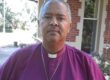
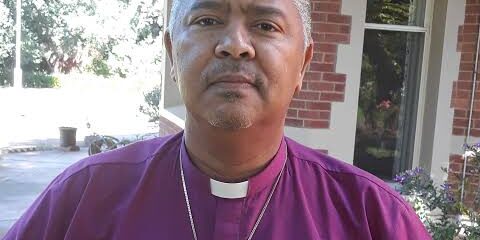
The Right Rev’d Clarence E Bester
11th Bishop of Wangaratta
Theme: The God of Collaboration
Welcome and Acknowledgement of Country:
Today, as we meet for the third session of the Forty-first Synod on the land of the Bpangerang people, we pay our respects to their elders past, present and emerging. We also acknowledge our 59 Churches which constitute the Diocese of Wangaratta and the land on which all of them stand.
We welcome all, especially those attending Synod for the first time and any visitors or guests.
We look forward to our Synod Eucharist this evening at Holy Trinity Cathedral, when we will also welcome other members of our Diocese.
As we move into the business and busyness of Synod, I want to remember all those whose lives and livelihoods are under threat. We pray especially for those in war-torn areas, as precious lives are lost because of the power-hungry and those with hardened hearts. Our hearts bleed with great sorrow for the loss of innocent lives and we pray for an end to violence and for peace to prevail.
SINCE OUR LAST SYNOD
Growing Your Church
We meet for this 3rd session of the 41st Synod less than ten months since the last session. It has been an intense and busy time navigating all our ministry and activities in both Parishes and the Diocese. Our Ministry Action Planning Team coordinated two sessions on Growing Your Church (GYC) and encouraged Parish Councils to place this as a high priority on their agendas. The Parish is the real hub for ministry and the implementation of our ministry action plans. As a Church we need to be welcoming to all people and offer generous hospitality to all.
HOPE 25
Throughout Lent we were encouraged to engage through Prayer, Bible Study and Reflection with the HOPE 25 Lenten Booklet prepared by the Bishops of the Anglican Church of Australia. This was to set the scene to develop the HOPE 25 theme: ‘To bring hope in an uncertain world’. From Easter until Pentecost, each Parish will engage in an outreach activity to further develop the concept of bringing hope to others.
Reaching out and bringing hope to others needs to be one of our non-negotiable actions as God’s people. As a Diocese we have already been involved with bringing hope through our Mission Action Plan of ‘Walking in the Way of Christ’ and walking or journeying with others. We look forward to the presentations from parish representatives on their initiatives to share this hope.
Celebrating Hope in appreciating the past
These presentations will be followed by interactive discussions that should enable us to develop an ongoing plan for our ministry over the next few years. On 13 March 2027 we will be celebrating the 125th anniversary of the Diocese of Wangaratta – when Bishop Armstrong was enthroned as the first Bishop of Wangaratta. This will be preceded by other 125th commemorative celebrations, including the Melbourne Diocese’s ‘New
Dioceses Act’ on 3 October 2026 and the consecration of Bishop Armstrong as a Bishop on 24 February 2027. I am hoping that our celebration of these events, which will start later in 2026, will also instil hope in each of us as we appreciate the inauguration of the Diocese.
Envisioning Process
In preparation for all these events it is important for us to pause, reflect, pray, discern and discuss the ongoing direction for our Diocese. The year 2026 will mark the culmination of our current Diocesan Vision and Mission Statement.
In 2016-2020 we developed a Diocesan Strategic Plan of ‘Embracing the future together’. In 2021, we developed a vision and mission statement to ‘Walk in the Way of Christ’ and to walk/journey with each other. We now need to work towards a new vision that will include our 2027 celebrations.
Acknowledging five years of Episcopal Ministry
On 22 and 23 February, I celebrated the 5th anniversary of my consecration and enthronement as the Eleventh (11) Bishop of Wangaratta. The past five years have been challenging but, in many ways, also exciting. It might not seem a long time, but for me it feels like a lifetime. We acknowledged these celebrations by having a special morning tea when the Dean blessed the new Pergola area that was previously the Chook Pen at Bishop’s Lodge.
We also had the opportunity to launch the Bishop’s Home Mission Fund. I appealed to each Parish Leadership for an initial contribution of at least $500. As a special Lenten Appeal, we have also provided 25 envelopes per Parish to further grow the fund.
Our next effort will be a Winter Soup Appeal, where Parishes will host a monthly Soup Sunday from June to August and, through a special collection, contribute to the Bishop’s Home Mission Fund. Any nonperishable soup donations will still go to Anglicare for Emergency Relief.
The purpose of this Fund is to assist Parishes where needed with ministry and social development support. This will also extend beyond the Diocese and Australia to spread our ministry of compassion where needed. Unless we get good support for this, we will not be able to do much. I want to encourage all our congregations to please support this initiative and, together with your clergy, extend our HOPE 25 initiative beyond 2025.
As we look to the future, let us pause for a moment and remind ourselves of our ministry over the past five years as we watch a picture presentation prepared by Michelle.
Through change and challenge, notwithstanding the Covid-19 pandemic which shook our world and limited our initial ministry, and through God’s grace, we have achieved much together. These pictures show only part of our wider ministry and activities but tell a story of what has taken place throughout the Diocese since 2020.
The concepts of visibility, availability and presence will always remain the focus of my ministry and I hope yours too. A ministry that does not include these three important actions will miss the opportunity of meeting people where they are.
Gill Baker & David Mitchell Environmental Memorial Award.
This award was also launched at Bishop’s Lodge last year, so 2025 marks the first opportunity for applications to be considered. I hope that we have a few submitted already – the cut-off date for applications is 30 June 2025. Awards will be presented at a special service for the Season of Creation towards the end of August. Details were sent to all Parishes and more information can be found in the last edition of the Advocate Newspaper.
St John’s Village Chapel
At the beginning of December 2024, we re-hallowed the Chapel at St John’s Village for Divine Services. The Chapel has not been in use since 2020 and was used as a storeroom during Covid-19. The Chapel will always remain consecrated Anglican worship space. We were very happy to enter an agreement with the CEO of RESPECT to share the Chaplaincy costs, which now cover two days per week for ministry. We are hopeful that this necessary and longstanding ministry will increase in days and continue well into the future.
Leadership Structure, Clergy Movements, Appointments, Resignations and Retirements.
Last year, I referenced the implementation of a new Ministry Leadership Structure. There are now two Ministry Areas known as the Archdeaconries of Goulburn and of Hume, each coordinated by an Archdeacon and assisted by an Area Dean and Safe Church Coordinator. I have also appointed an Archdeacon to the Ordinary (Bishop) who also serves as the Diocesan Safe Church Coordinator (SCC).
The following appointments were made:
· The Ven Canon Matthew Healy as Archdeacon to the Ordinary and Safe Church Coordinator.
· The Ven Mel Clark as Archdeacon of Goulburn
· The Rev’d Jerome Francis as Area Dean of Goulburn
· The Rev’d Mario Hendricks as SSC for Goulburn
· The Ven Canon Scott Jessup as Archdeacon of Hume.
· The Rev’d Canon Moira Evers as Area Dean of Hume
· The Rev’d Maryann Leonard as SCC for Hume
This structure is a good mechanism of support for me, ensuring that I don’t have to deal with everything myself.
Additional Registry Staff Member
Last year we also welcomed Ms Georgia McGuffie to the Bishop’s Registry Office as Administrative Support to the Registrar and Assistant Finance Officer.
Chaplain at Trinity Anglican College
In October last year we welcomed The Rev’d Sophie Watkins as Chaplain at Trinity Anglican College in Thurgoona. Her employment contract was not renewed beyond the probation period.
Internal Diocesan ministry changes included:
· The Very Rev’d Neil K Hicks as Vicar and Dean of Holy Trinity Cathedral
· The Rev’d Mel Clark as the Vicar for Benalla.
· The Rev’d Richard Pennington as the Priest-In-Charge of Euroa and Murchison.
· The Rev’d Andre Du Plooy as Locum Tenens in the Parochial District of Central Goulburn
· The Rev’d Cathy Carden as Assistant Priest at Holy Trinity Cathedral.
· The Rev’d David Still as Senior Associate Priest at Holy Trinity Cathedral.
· The Rev’d Lesley Lewis as Assistant Priest at Beechworth.
· The Rev’d Moira Evers as Chaplain to St John’s Village.
Ordination
The Rev’d Dr Peter Pocock was ordained as Priest and serves as Locum Tenens at All Saints Corryong.
Resignations and moves outside of the Diocese:
The Rev’d Elwyn Enos
The Rev’d David Kerr
Retirement before the next Synod
The Rev’d Jacques Jefferies from full-time stipendiary ministry.
Clergy Statistics
We have 32 Clergy with Permission to Officiate, of whom five serve as Locum Tenens and 19 licensed clerics serve in Parishes, Schools or Hospitals.
Our lower than usual numbers are because of two vacant parishes and cooperative ministry structures where one cleric serves two parishes. We are looking at further internal ministry changes to try and cover most of our part time parishes.
My heartfelt thanks to all our clergy, in whatever capacity, for their service to God and God’s people amidst difficult circumstances.
I am especially grateful to those who have taken on cooperative ministries, which increases their workload without any extra renumeration. I know that there are more attractive offers in other places and clergy are often offered positions elsewhere. I will never stand in the way of any cleric wanting to take up another opportunity of ministry and I am grateful for their loyalty and commitment to this Diocese.
THE GOD OF COLLABORATION
This being my 2nd Synod as Bishop over 6 sessions, I have tried to develop themes that would help us to see what God is already doing through us in our ministry together.
I hope that these different themes have helped us shape a deeper understanding in relating to what is happening around us. We do become sentimental about our ministry because of the deep connection we have to a particular place, church or congregation. Sometimes we are caught up in the past to the extent that we become resistant to change and see challenges as threats instead of opportunities.
In 2020 I spoke about the ‘God of Surprises’ and of how we can be filled with amazement at what God can do through us in a changing and challenging world.
In 2021 I developed the theme of the ‘God of Possibilities’, knowing that all things are possible through Christ. We may forget that our primary call is to be followers/disciples of Jesus and our focus to bring, but also to be, hope to others as we explored the 2022 theme ‘The God of Hope’.
Over the last two years we considered the themes of The God of Transformation and Reconciliation. We have noted that transformation can lead to renewal and working towards reconciliation can lead to the restoration of relationships in all aspects of our faith and lives.
Having had the privilege of serving as the Archdeacon for Ministry Development and as Bishop for the past five years, I have not only had a bird’s-eye view of ministry but have been practically engaged in all aspects of ministry. Over the past 9 years I have been part of the development and implementation of two strategic or ministry plans for our Diocese and we are about to embark on a third.
During my tenure as Archdeacon for Ministry Development I wrote a few articles in the Diocesan Advocate Paper to help us move to a new understanding and direction for our ministry in the Diocese. I have personally walked alongside a few Parishes in developing Ministry Action Plans and engaged with every Parish and Parish Leadership Team in relation to their respective administrative, financial and missional strategy.
Since becoming your Bishop, the focus of my homilies and engagement strategies when visiting Parishes, including through intentional conversations, was to re-focus our lens to move from a maintenance to a mission mode. I knew then, as I know to this day, that, unless we focus on what God calls us to do, we are presenting an image of the Church which is not in line with the gospel message. I have always held dear a ministry of collaboration which is again creatively expressed in our Diocesan Vision and Mission statement to ‘Walk with Christ and to journey together’. Five years of intentional conversations and a mission-mode operational shift must lead us to new ministry paradigms. We will have to collaborate on a ministry structure in our present context which provides us with challenges and opportunities.
Through a forward-focussed, realistic vision, rather than a sentimental one, we need to explore how the God of Collaboration calls us to partner with each other for the advancement of God’s Kingdom and for the furtherance of the gospel to bring good news to all. God has always been, and will always be, a God of Collaboration because God calls us to share in the work of God’s Kingdom.
Jesus, in the exercise of his ministry, never acted as a solo pilot, but called others to share in this ministry of collaboration, the ministry of working together. In the training, equipping and sending out of the disciples, Jesus established ‘Team Ministry Structures’ when sending them out two by two. (Mark 6:7)
In preparing the disciples for the gospel enterprise following his departure, Jesus called his disciples to love and support one another and to work, pray and minister together. This was important, knowing the hostility of their world and context. Somehow, we have lost the plot, as parochialism has become the order of the day and, even within a Diocesan Ministry context, the ‘them and us’ syndrome is on the increase.
As the background to all of this, I have also seen the decline in numbers within our congregations, the financial constraints in most of our Parishes, the lack of energy, resources, peoplepower and the changing faces of many who served in this Diocese. Even with cooperative ministry structures, we still see the continuous struggle and the many challenges we are faced with as a Diocese.
Out of the 59 Churches in the Diocese of Wangaratta, 21 of these have fewer than 10 people in attendance, with some mostly around three or four regular attendees.
Ministry Districts with up to four or five Churches are still not able to cover full-time ministry and, as a result, in 2018, our Bishop in Council resolved to change the status of most Parishes to Parochial Districts. Even in the few Parishes where ministry can still be financed, Op-Shops or Property Rental income have become the saving grace. There are also many fundraising activities to augment the income of all Churches.
Over the past few years, I have de-consecrated six Churches which evoked a feeling of great sadness in me. I had the fear that I was going to be known as ‘Clarence the De-consecrator’ but maybe this would create a space for us to encourage parishes to establish ministry endowment funds. Common Fund number four was created exactly for this purpose and it is the best way, through the sale of redundant land and property, to invest in the future ministry of congregations. This is a safeguarded arrangement as it exempts parishes from property or land tax from rental income and reduces the ever-growing maintenance costs associated with older buildings.
Consolidation is the action or process of making something stronger or more solid. It is that action or process of combining a few things into a single, more effective or coherent whole. To ‘join together’ into a whole can certainly, over time, improve our efforts and provide a better outcome. The reality is that we are not property experts or developers and the lesson with our schools in the past should steer us in the right direction to make real and informed decisions that are not based on sentimentality.
The missional intention of Jesus throughout his ministry was always to bring others together and for people to journey together. This would certainly include our operation as God’s Church here on earth. I would like to re-iterate my stance that we should not allow the advancement of parochialism, rather it is vital to explore new paradigms in support of each other and for the growth of God’s Church within our Diocese.
I believe that God wants us to collaborate, to bring together our individualised ministry structures to work for the common good of all people and parishes within our Diocese. This requires radical discipleship and innovative leadership strategies where we will be willing to ‘take the bull by the horns’. This must be accompanied by willing participation by all our stake holders because, unless our collaboration beats competition, we will find ourselves in a space where we might not exist in our present structure as a Diocese for long.
Mentioning the 21 Churches with fewer than 10 in attendance should be reason enough for us to strengthen our plan and put our energy into those Centres where there is a better chance of a continuing ministry. We cannot hold on to some Churches for sentimental reasons, keeping them going for just a handful of people. In the early Church, developments boast of congregations meeting in the homes of believers. Their ministry entailed not holding on to property and valuables, but the sale thereof for the welfare of all according to their need. (Acts 2:43-47)
There is no doubt that there will be resistance towards a new paradigm from some parishioners and congregations.
One of the images of the Church is as the Body of Christ and therefore we need to work together as described in 1 Corinthians 12:12-31. Collaboration is what working together is all about and what I believe is God’s desire for our Church today. This image of the Church challenges us within our Diocese to not only ‘think outside the box’ but to move ‘outside the box’. In addition to what we are already doing, we need to embrace new opportunities and navigate a collaborative ministry approach.
In the past, we have amalgamated parishes to produce financially sustainable structures and now we have cooperating Parishes. To the best of our ability, we endeavour to retain the individual parish identity even within a cooperating ministry. Some of these co-operating ministries have been referred to as ‘Mission Impossible’, where up to seven centres are included. To this date, we only have three of these operating and the challenge continues because I have never seen such blatant resistance towards co-operating ministries. Some of our people are living in a ‘dreamworld’ thinking that their ministry expenses will be covered by a handful of parishioners. I can assure you that, unless we work together as ministry units, my hopeful efforts of ensuring the continuing ministry of the Diocese of Wangaratta will all be in vain. Ongoing review of these cooperating ministries will determine the most effective model for the future. This will probably put further pressure on us given the difficulty of finding clergy willing to work in part time parishes. It is already difficult to find clergy to work in large geographical and multi-centred parishes. We will certainly have to rely more on locum tenens.
The other reality is that our clergy, especially those in cooperative ministry structures and those who need to augment their stipend by ministering as Chaplains, are tired of doing two different ministries. The same applies in Ministry Units where there are four to five Centres, most with fewer than 10 people attending and within easy commute to the neighbouring Church.
Two years ago, I spoke about a financial calculation to help us determine the financial and operational viability of a local Church. Though our Parish Governance Act describes the function and operation of a Parish, Parochial and Episcopal District, as well as a local congregation, the hard reality is we need to determine what will work and how best we can develop a biblical model of ministry for the continuation of ministry, but not necessarily within a Church building.
Under the leadership of the former Bishop of Bendigo, Bishop Andrew Curnow, the Diocese developed a strategy where any local congregation needed to have at least 10 people registered and in attendance, with the congregation raising an annual income of $10,000. I would now like to propose, through our Bishop-In-Council, that any local congregation would need to contribute their share of Insurance, any property rates and utilities, as well as the upkeep and maintenance of their buildings. In addition, a yearly amount, yet to be decided by Bishop-in-Council and depending on how many services are held per month (and always including at least Christmas and Easter), would need to be raised towards the overall ministry costs. These guidelines, when resolved, will be communicated to all parishes and used to determine a new ministry operational plan, with the strengthening or establishment of a ministry endowment fund through our Common Fund number four. The Archdeacons will assist Parishes to adapt to these changing arrangements, facilitating this process through intentional conversations with Parish Councils.
In the light of all of this, I would hope that we will further develop our collaborative ministry as the people of God in Wangaratta. This means that we must explore different models of ministry and ways of working together where we will also look at Team Ministry opportunities. In effect, this structure presents an image of shared leadership among a few clergy. This will certainly enhance our collaborative approach to ministry which will also be a supportive one. It would of course foster the radical idea that, in some instances, we will need to work across Parish boundaries, as well as increase the number of lay people trained and licensed for appropriate ministry roles.
When I was Archdeacon for Ministry Development, my first report to Bishop John Parkes included that the Diocese would only have 14 sustainable ministry structures. I can now certainly see this becoming a reality. In one way, we can describe some of our parishes as being on ‘life support’. Unless we do things differently, act wisely and in a timely manner, we might find ourselves in a very awkward situation soon. In 2016, when there was a motion before the Synod to resolve an investigation into the division of the Diocese of Wangaratta, with parts going to other Dioceses, as a relative newcomer to the Diocese I opposed this. I know the difficulties, I am aware of the challenges, I see the opportunities and I will continue to work towards the ongoing ministry of the Diocese of Wangaratta. I ask you to join me in this journey because, together, we can do much. We need to collaborate so that we can consolidate better and work more effectively in the proclamation of the gospel of Christ. We have embraced the future together, we walk in the way of Christ and we journey with one another.
LEGISLATION
At this session of Synod, we will only make minor changes to the Trustees Act, which includes tidying up references to the Parish Governance Act instead of the old Parish Administration Act.
Following our Synod last year, we were hoping to put a Synod Committee together who would review some of our Acts and make recommendations for consideration by our Advocate. Given suggestions and possible actions through this Synod Charge, it is prudent for us to do so this year which we will action soon.
ANGLICARE PARISH PARTNERSHIPS
A report and presentation by The Rev’d David Still will include the conclusion of our present structure of the Anglican Parish Partnership Program. This is unfortunate but necessary as, even after concerted efforts and presentations to parishes, the lack of interest reflects the reality of our lack of people, resources and energy levels to do anything new within Parishes. I have asked Anglicare to work through their structure to see how Parish Partnerships with some parishes can be enhanced where they already exist. Hopefully a paradigm shift will spark further interest.
ANGLISCHOOLS (ASC)
This year marks the 40th anniversary of the AngliSchools (formerly ASC) and we are proud to have four of the sixteen AngliSchools in our Diocese – the others being in Western Australia and international. I remain grateful for our Partnership with AngliSchools and my role as Visitor to the four Schools within the Diocese of Wangaratta. As we welcome our four principals today for presentations, I would like to express my thanks to The Rev’d Peter Laurence OAM, CEO of Anglischools, for his consistent work
in supporting Cathedral College Wangaratta, Cobram Anglican Grammar School, Trinity Anglican College in Thurgoona and our almost 2-year-old All Saints Anglican School in Shepparton, which recently won the HOPE-25 song competition.
The Rev’d Robert Storey Whalley Memorial Lecture, Friends of Cathedral Dinner and Women’s Ministry Conference
Unfortunately, our anticipated Robert Storey Whalley Memorial Lecture did not happen in February this year but will take place on Friday, 25 July as part of the Friends of the Cathedral Dinner at Purbrick Hall. The Rev’d Colleen O’Reily will be our guest speaker and I encourage you to attend in remembering and honouring an outstanding theologian and great encourager of lay ministry. Details will be sent to all Parishes in due course.
If all goes according to plan, we hope to have a Women’s Ministry Conference on Saturday, 26 July 2025, which is a deferment of some of what was planned for our Ministry Conference in February.
CONCLUSION AND APPRECIATION
Today marks the end of an era as we give thanks to God for the outstanding service of The Honourable Justice Clyde Croft AM, who has served this Diocese excellently for fourteen years as Chancellor. Clyde served with Bishop John Parkes for nine years and I have had the privilege of his skilful guidance over the past five years. As Chancellor, Clyde was ex-officio on both Bishop-in- Council and the Diocesan Trustees. Clyde is not present here today because of work commitments and I will say more about him tonight during the service. I do however, at this moment, want to express our thanks to Clyde and know that in some way, he will still be involved with our Diocese.
One of the most superb legal minds within the Anglican Church of Australia is our own Advocate, Ms Rachel Ellyard. As Advocate she has always guided us in our sessions of Synod and worked tirelessly in the preparation of legislation to be presented to Synod and, like Clyde, advises me on many matters pertaining to the legalities of our ecclesiastical structure. I am exceptionally excited that Rachel, with unequivocal support from Clyde Croft, has accepted my nomination to serve as my Chancellor. We look forward to a long association and know that, with Rachel’s guidance, the Bishop and Diocese will be in good hands.
The unsung heroes of our Diocese are often those who work behind the scenes to ensure that Synod runs smoothly. We are well served by our Registrar and Finance Officer, Julie Torpey who takes special care for the overall running of the Registry Office. Our thanks to Fiona Van Bree who is our logistical organiser for Synod. A special word of thanks to our Diocesan Treasurer, Norm Kenny for his meticulous work with our finances.
Thank you to all the members of my Leadership Team for your wise counsel, advice and support. Our collaborative way of working enables me, for the first time in five years, to take extra care of myself.
There are many who support me in various ways and you know who you are, but I would not be able to fulfil my ministry without the prayerful and loving support of Michelle.
Above all, my thanks to God for giving me the strength and courage to guide this Diocese into the Way of Christ. Many see Clarence the Organiser, but don’t see those prayerful moments where doubts turn into faith, despair into hope and darkness into light, which maintains and strengthens my faith in our collaborative God.
Thank you and God bless.
The Rt Rev’d Clarence E Bester
Bishop of Wangaratta