
DIOCESE OF WANGARATTA
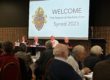
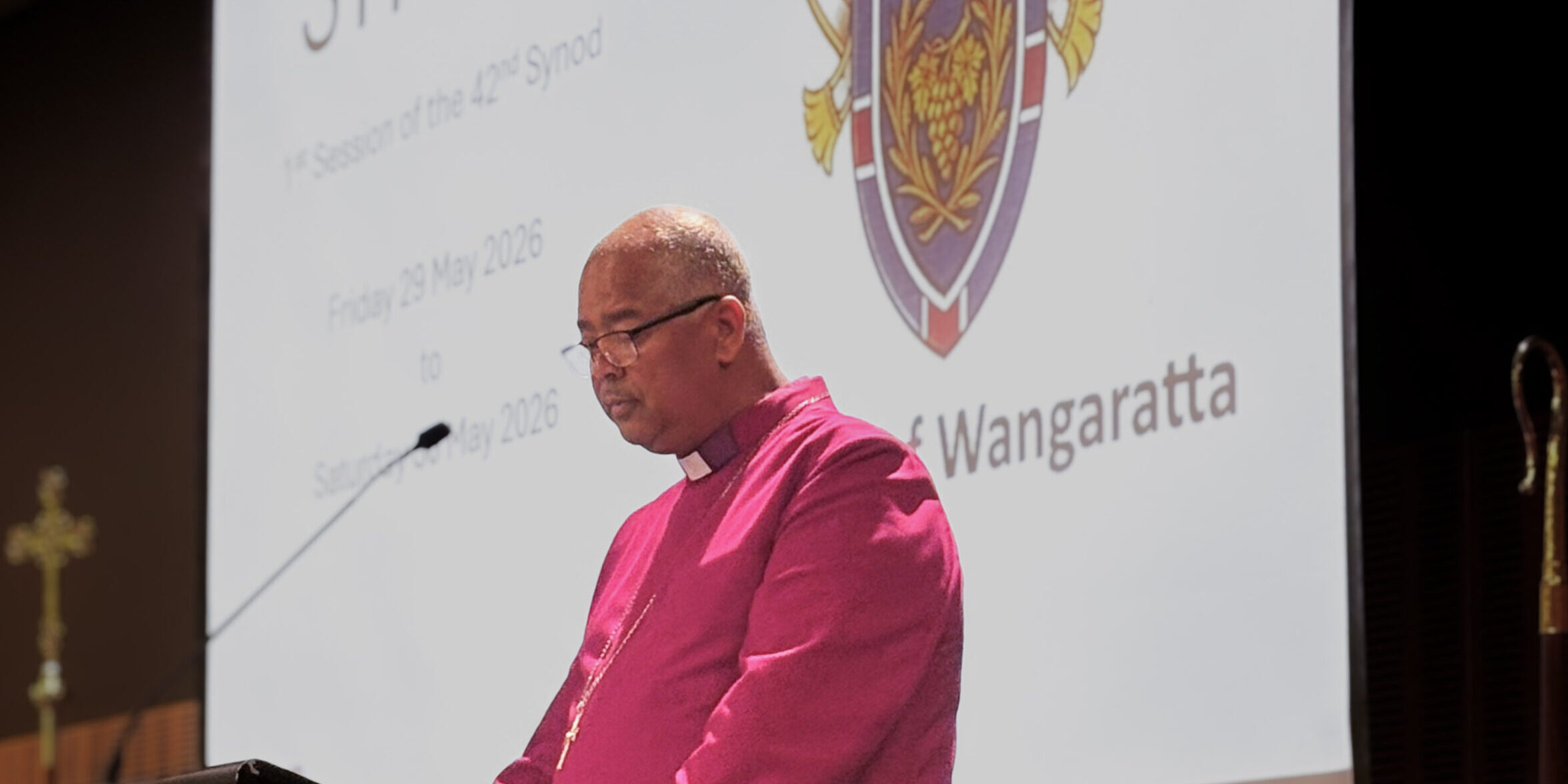
42nd SYNOD – 1st SESSION
29 – 30 May 2026
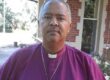
The Right Rev’d Clarence E Bester
11th Bishop of Wangaratta
Theme: The God of Celebration
Welcome and Acknowledgement of Country:
As we gather to meet for Synod on the land of the Bpangerang people, we pay our respects to their elders past and present. We also acknowledge our 56 Churches in the Diocese and the land on which all of them stand, honouring all First Nations People of these respective lands.
We welcome all present here today, those who will join us throughout the day and this evening, as we gather for the celebration of the Holy Eucharist at Holy Trinity Cathedral.
At our Eucharist this evening, and also for a special presentation of AngliSchools in our Diocese, we will welcome The Rev’d Peter Laurence OAM as our Preacher.
Synod, Sessions and Elections:
A new synod gathering with three sessions is a wonderful time of newness and renewal. Today we welcome all those who have been elected to attend the 42nd Synod of the Diocese of Wangaratta over the next three years. Some of our number, well known to us, had to step down after three Synods (nine sessions) as the maximum allowed time in accordance with our Synod Act. Fortunately, we are now applying, for the second time, what is commonly referred to as the Croft-Ellyard ‘doctrine of necessity’ by allowing those who are ineligible for election to still be part of this session of synod as no one else has been elected or was willing to be a synod representative. This is becoming a challenge for us as a Diocese as it makes us look at these prohibitions and the need to review some of the rules approved many years ago, as to whether some of these are still relevant to our context.
A first session of a synod is also an opportunity for us to hold other elections as mandated and have representatives elected to Diocesan Boards, Councils and Committees. The pool of eligible and willing people is becoming fewer and, over the next months, we will need to have a review of our Diocesan Acts.
Synod Legislation 2026:
One way of addressing a need for change is our Council of the Diocese Act, in which we are proposing a change to the term of office and reviewing the number of those who serve as ex-officio members. This will enable a second term for the Council of the Diocese. A similar change was affected to Diocesan Trustees Act in 2025.
SYNOD THEME 2026
At last year’s synod charge, in a section entitled: ‘celebrating hope in appreciating the past’, I referenced a few plans, activities and celebrations to take place from October 2026 to August 2027. Celebrations are important, as they create the opportunity for us to gather and to commemorate and elevate these special occasions.
Following a series of ‘God-moment’ expressions since my first synod address, I am continuing in this tradition because of our 10-month celebratory plan and have themed this synod charge as ‘The God of Celebration’.
How appropriate, because most of us gather weekly for the celebration of the Holy Eucharist, which is one of the ways in which we celebrate our unity in Christ and with one another.
Celebrations are wonderful moments as they also highlight our appreciation for people.
For us, it will be the 125th celebration of our Diocese on 13 March 2027, when Bishop Armstrong was enthroned as the first Bishop of Wangaratta. We will launch our celebrations on 3 October this year as we recall the Melbourne Diocese’s ‘New Dioceses Act’ passed in 1901. We will also do something around 24 February 2027 which is the anniversary of Bishop Armstrongs consecration and then conclude all this at the synod in 2027. I am hoping that we have synod close to 18 August 2027 when the first synod was held in Wangaratta in 1902.
More information will be available soon and distributed to clergy, synod representatives and parishes for distribution to all in the Diocese and beyond.
Tomorrow, during Conference of Synod, we will have an opportunity to actively engage in conversation about these celebrations as well as set the pathway for our next Ministry Action Plan (MAP) 2026-2031.
THE GOD OF CELEBRATION
Creation is a celebration and a gift given to us. From the outset we are reminded that God was exceptionally proud of what God had made ‘and indeed it was very good.’. (Genesis 1 vs 31) God delighted in creation and continues to do so. Every day is therefore a day for celebration of creation and the life that God affords to us. Life is a celebration, because God has given us life and continues to sustain us throughout our lives. We are to celebrate life, even in the face of adversity and challenges.
God is a God of Celebration, because God shows appreciation by providing us with all that we need for and throughout life’s journey. God celebrates creation and this celebration is beautifully expressed in transformational moments of life over death, victory over defeat and light over darkness. God certainly calls us to celebrate our various occasions, for even death is often referred to as a celebration of life, instead of the commonly used terminology of a burial or funeral service. I am amazed at the upkeep and remembrance of Year’s Mind in Parishes, as these commemorations are often recalling our appreciation for the saints in glory. ANZAC and Remembrance Day commemorations highlight death and loss in the service of our country, as a celebration of life and hope.
Psalm 118:24 reminds us that ‘This is the day that the Lord has made, let us rejoice and be glad in it.’ As life is a celebration, every day is a celebration, and we are called to express our gratitude through a joyful celebration amidst the challenges of everyday life.
As we consider the theme of ‘The God of Celebration’, I want to link this to some of our joys, appreciations, challenges and opportunities.
Ministry Development
My inaugural ministry as bishop was at the onset of COVID19 and I started with the desire to exercise a ministry of visibility, availability and presence as mentioned in my first synod charge. It has been a roller coaster ride and, on reflection, I yearn for those moments when ministry did not have as many demands as it does now. Since then, we can celebrate that we have been able to visit almost every Anglican Parish and Church in the Diocese.
Teaching, Training & Equipping
We also had the privilege of engaging in nine Ministry Conferences, some of which included the training of Church wardens, Parish Councils and Treasurers. Part of our Ministry Development program has been to provide training for our laity and to continue fostering new vocations and strengthen lay participation in the Diocese. Countless opportunities have been made available for training and development and it is always great to have participants from all over the Diocese.
Since the end of 2020, our clergy have engaged in quite a few Clergy Conferences and Retreats to nurture and advance their professional development, as well as participating in Clergy Supervision and Spiritual Direction or Companionship to enrich their spiritual formation.
Other strategic initiatives included Church Growth and Development programs where we have encouraged participation at Parish Level – the hub for ministry activities.
Planning and Engagement
Our Ministry Action Planning (MAP) Team has worked consistently to foster and encourage moments of celebration and engagement for us as a Diocese. Sadly, these suggestions are not always taken up in the Parish context as it seems that parochialism remains on the rise.
A recent concept was the program of JOY 26 and the non-participation of quite a few who preferred doing what we ‘normally do’ during Lent without embracing new opportunities for revitalisation. We identified five themes on JOY, sent out accompanying prayers and readings but some have not given much attention to this. In establishing our 2016 to 2021 Strategic Planning Operation Plan (SPOT), it was made clear that we must engage in ‘Business Unusual’. We have heard it being said so many times that we cannot do the same things and expect different results. I hope that clergy will embrace these opportunities for themselves and the people in their care. These are also moments of celebration as we embrace renewed pathways in our common life as the people of God.
Bishop’s Home Mission Fund
At Synod last year, I encouraged our Parishes to support the Bishop’s Home Mission Fund to help with Parish support. I requested that, for one year only, we set all other mission agencies aside and support this one initiative. Sadly, the participation has not been as expected.
We are supposed to celebrate our togetherness and unity through little things that can strengthen our ministry in the wider Diocese. Presently, parishes have contributed about $22K with a further $10K added from an individual who gave this money for Small Church Development.
How do we celebrate the gift of each other and how do we celebrate our ministry development initiatives when there is this lack of enthusiasm to work as a Diocese for the common good and to support each other?
Our aim and target
We will now extend this initiative until the next Synod and I ask that all our Parishes come on board so that we can raise $125K by the 125th celebration of our Diocese on 13 March 2027. This is my hope and I pray that it will become our joy as we embrace this initiative together.
To reach this target, I am now asking all parishes that, at every pastoral visit of the Bishop for divine services, a retiring collection be taken as a contribution to the Home Mission Fund. I want to encourage every Pastoral Charge to raise $1,250 with effect this synod and to gift it ceremoniously at the launch of our 125th celebration on 3 October 2026. I hope that this will be embraced as a moment of celebration. Some may want to organise a special fundraising event. A first Diocesan initiative supported by our MAPS TEAM will be a Trivia Night on Friday, 19 June at Purbrick Hall in Wangaratta. Michelle and I will also host a function during September towards this cause so that together we will celebrate all the contributions that will hopefully raise $125K.
Ministry Challenges and Opportunities
Since our last Synod, I have deconsecrated four Churches and, in my synod charge last year, I talked about the redundancy of land and buildings. We set a target for people at some places of worship to at least have an attendance of 10 people, an income of $10K per year towards the cost of ministry and being able to cover the associated costs for the running of the plant.
The hope
I am grateful for the responses of many and the encouragement regarding this process. It was never to get rid of smaller churches, but a way of introducing the implementation of different ministry models. At these deconsecration services we are always reminded that the Church has never been confined to a building. Even at these services, which feel like a ‘burial’ service, it is often referred to as a Service of Thanksgiving which can easily be termed a Service of Celebration.
Over the past few years we have given much detail about how the income of ministry endowment funds will secure the financial sustainability and ministry continuance of parishes. We have also shared the mechanisms of how this can be achieved.
I knew that there would be opposition and sadly, we have received threats to this end and exposure in the press which contained misinformation about the processes involved. Sentimentality has taken over in many ways and the Archdeacons who have navigated this process on behalf of the Diocese have met with the same kind of opposition and resistance. It is sad that, even with the ‘writing on the wall’ of the inability to effect change to a positive ministry operation, the concept of maintenance is still overtaking the mission of the Church.
At my first sermon to you as the Bishop of the Diocese at the occasion of my enthronement on 23 February 2020, I reminded you that we are not only the gathered community, but we are also the scattered community which is the place where we are called to meet others. The celebration takes place when the lost and the wayward, the lonely and forgotten, the hurt and those who mourn will feel the loving embrace of a ‘Church without Walls’, the People of God out in the community, walking and ministering alongside others.
The reality
There has been reluctance to engage in any ministry plan of action and the twenty-one (21) Churches with less than 10 people attending, in most cases, have remained unchanged with no more joining. The cost of maintaining these buildings far exceeds any income, which adds additional pressure on the main Parish Church. The English model of a Church in every village and town is probably outdated because the transport system has changed and urbanisation from regional to the city or bigger towns is on the increase.
There are parishes with more vicarages than are needed, but it seems now that we have become property managers and renters of buildings that have more expenses than income. There are ever-growing expenses of land tax, rates and tax which will apply to these places, especially when not occupied by a minister of religion. We also have large vacant properties which are only an expense as part of the maintenance budget or someone’s time.
There is this senseless argument that the Diocese wants to retain the money when our Parish Governance Act clearly sets out how the sale of redundant land and buildings is to be managed and proceeds distributed. If a sale is for the purposes of replacement, of course the proceeds will be for that purpose. It is the establishment of Common Fund number four as a ministry endowment, which protects the capital with a 20% value for recapitalization, the larger percentage of remaining income is used for ministry and where needed, necessary maintenance. We are also depositing a percentage into the Church Extension Fund to enable us to support Parishes and other Ministry aspects in the Diocese.
All of this is for the common good and celebration of our ministry together as a Diocese made up of 25 Pastoral Charges and 56 Churches.
The celebration
God calls us to celebrate what we have and to celebrate that common understanding of sharing what we have so that we can fulfil the mission of the Church which is the Mission of God. I am always intrigued by the prayer from the South African prayerbook that is sometimes used with the offertory of gifts before the thanksgiving prayer “Source of all Life, the Heaven and earth are yours, yet you have given us [a share] in all things…” I hope that we will change the ‘me’ and ‘I’ syndrome and develop the ‘we’ and ‘us’ syndrome so that we can celebrate our common life and ministry in the Diocese of Wangaratta.
The ongoing challenge.
To assist us in this regard, I call on all in this Synod to support a motion that will be presented by the Archdeacons that will empower the Bishop and Bishop-In-Council to take such action that will ensure the further establishment of the ministry endowment funds and to work to the conclusion of any ministry unit where ministry continuance seems impossible. Of course, we will do this in conjunction with a Parish.
Not wanting to delay the inevitable, I will however give all these ministry units up to 10 months to finalise matters after concerted ministry development initiatives which we will support as a Diocese. I do however want to encourage us to move sooner rather than later, as reports circulating in the press and the reality of what we need to prepare for, will force us to take the necessary action.
The Church & Ministry Structures
Models of Ministry have always been part of the fabric of the church and the ministry of Jesus. The task of the Church is to engage in God’s mission and ministry and to lead God’s people into a deeper and more meaningful relationship with Jesus.
In Jesus’ ministry among the people of God, healing, wholeness and empowered service were the order of the day. The New Testament Church rooted their ministry in the model of Jesus in every sense of the word. The more organisational structure of the church sometimes obscures the vision of what we are called to be and to do. This has certainly rubbed off on congregation members throughout the ages which caused dissatisfaction and led to denominationalism.
In our celebration as God’s people, we need to celebrate Jesus and the awesomeness of God who has called us and who continues to sustain us in and throughout our ministry. Even in this thirtieth year of my ordination as a Deacon and Priest and now as a Bishop, the Church for many has become an optional extra.
We have these generational gaps and to an extent we can see the direction that many of our congregations are heading. Needless to say that Bishop Armstrong in 1924 in his Synod Charge referenced Church decline as an issue. Vacancy consultations very often express a hope of finding the impossible for someone to lead ministry in congregations. We have challenges attracting clergy to regional centres with multi-centre Parishes. We have declining congregations and the workload on clergy increases with cooperative ministry arrangements, which presents an unattractive model when putting a parish profile together with the hope of recruiting someone for ministry.
We have now introduced a ‘supervision model of ministry’ where recently ordained clergy, even after a few years serving curacies, are now being supervised by a retired experienced priest. This helps us with a final stage of formation of ministry over a nine-to-twelve-month period to give them the full responsibility of a pastoral charge. Parishes not being able to fund full-time ministry are mostly looked after by a locum-tenens, some with only fee for service.
While other Dioceses have a similar number of Parishes, their Registry Staff outnumbers ours and their celebrations going forward include wonderful visionary actions of further ministry for support for the Diocese and the Bishop as part of their envisioned 125th celebrations. We share our anniversary with the Diocese of Bendigo and Gippsland. In our context now, I had to clear my Sunday Pastoral Commitments to Parishes to take care of the ministry of the Cathedral for two months, hoping I will find someone to assist with services until the Dean officially retires on 31 August 2026. Sadly, and at this moment, we cannot cover the cost of a Dean for the Cathedral and unless we engage in some ‘unattractive cooperative model of ministry’, we will not be able to offer a full-time position to any potential candidate. Yet, there is this expectation that we must, when we clearly cannot.
Cooperative Ministry.
The challenge of making this viable is that, in some of the existing groupings, churches are within just a few kilometres of each other and congregation numbers are small – only 3-6 in some centres, resulting in much work for the Priest-in-Charge but insufficient income for the upkeep of buildings, insurance etc. as well as payment for the Priest.
The reality is that there is no way that we can continue like this. We either need to grow together or whither apart. Notwithstanding that we cannot attract clergy to our Diocese, but this model of increased responsibility for clergy having to look after bigger centres is not good for their well-being.
Since 1902, thirty Churches have been deconsecrated. Yet, the Diocese of Wangaratta is still in existence and, even under difficult circumstances, we celebrate our life together in what we have lost, what we have and what we will achieve together in the future. In 2016 there was this plan to divide and fall and not to unite and conquer as there was a motion before synod to investigate the possibility of different areas of the Diocese to join with other Dioceses therefore marking the end of the operation of the Diocese of Wangaratta. In my maiden speech at that synod, being fairly new, I opposed that sentiment because I believed then, like I believe now, that ‘together we can’. I do however ask myself the question about what the future will hold with all the resistance to change and the holding on for the sake of sentimentality. I do not want to be the last Bishop of Wangaratta and I want us to work together for the common good to build God’s Kingdom in this place and to bring about the renewal, revitalization, re-organisation, re-establishing and re-birthing of our ministry and ministry structures.
I ask you all to join in this mission which is God’s mission for God’s People and God’s Church for which we have much to celebrate. I cannot offer you what others are offering in their context and envisioned celebrations, but I can offer you my ministry of visibility, availability and prayerful presence and my willingness to work and walk alongside you to foster the much needed growth and outreach as those who are partners in the gospel of Christ.
As we move towards the 125th celebration of our Diocese, celebrating the God of Celebration and each other, let us embrace the future which is in God’s hands and to which God calls all of us to make the difference.
Celebrating God, each other
As we celebrate the God of Celebration, we give thanks to God for each other, for what we had, what we have and all that we will work for and still receive.
We celebrate the once upon a time relationship with Anglicare Victoria who has now officially withdrawn all support from the Diocese. We have invested much in this program, supported them in every way and hopefully, in due course, we will celebrate our own program of Social Justice and Outreach to show that Anglicans in Wangaratta really care.
We celebrate our connection with AngliSchools and the four Schools in our Diocese and we celebrate with the four principals, many staff and students for the wonderful sense of Anglican Identity and for their witness of faith and spiritual development within the education field. We celebrate the appointment of Mr Jeremy Godden as the new principal of Cathedral College Wangaratta and look forward to him and his family joining the Diocese and region soon.
We celebrate the Anglican Communion, the Archbishop of Canterbury and celebrate the many Provinces and Dioceses throughout the Anglican Church. We celebrate our commitment to the sharing of the gospel of Jesus Christ and for working towards the unity we are called to have in him.
As we celebrate our own Diocese, we celebrate the Anglican Church of Australia even with our disagreements and pray that we may walk in the way of truth and in the way of love amidst a possible challenging General Synod in August.
We celebrate all our Parishes, Churches, Clergy and People and we give thanks to God for their generous hospitality and welcome to all who enter our places of worship. Hospitality is a mindset of celebrating others and we pray that we can continue to reach out to all others so that we can celebrate their ‘homecoming’.
We celebrate all those who have gone to their rest in the hope of rising again and now celebrating with God. Among all those who we will remember during this Synod, we celebrate Bishop John Parkes’ 11 years as Bishop of Wangaratta. I invite you to celebrate with us during August when we will remember Bishop John in a very special way.
We celebrate the many who work behind the scenes, the unsung heroes who keep the operation of the Diocese going, legally advising, preparing for meetings and synods and who keep the communication going even if only few.
We celebrate our Diocesan Ministry and Activities and, even in the face of challenges, we pride ourselves in what we can achieve, acknowledging that we are not called to be successful but to be faithful.
We celebrate those members of the Clergy who have served faithfully over many years and who will now retire from their labours. We celebrate them as a Diocese and will express our gratitude for their ministry through a Vote of Thanks that will be expressed by the Archdeacon to the Ordinary at the appropriate time.
To God be the glory!
The Rt Rev’d Clarence E Bester
11th Bishop of Wangaratta